
Sustainable Volunteering: Making Real Impact
How to volunteer responsibly and create lasting positive change.
What Is Sustainable Volunteering?
Sustainable volunteering means contributing your time and skills in a way that creates a genuinely useful and lasting benefit. Instead of simply arriving somewhere to "help," the goal is to support projects that local people actually need and that can continue to thrive without depending on a constant stream of volunteers.
For travelers, this can be a rewarding way to see a different side of a destination while contributing something meaningful during your stay.
Choose Projects That Actually Need Volunteers
The most important part of sustainable volunteering is choosing the right project. Look for hosts who can clearly explain what they need help with and why a traveler is useful to the project.
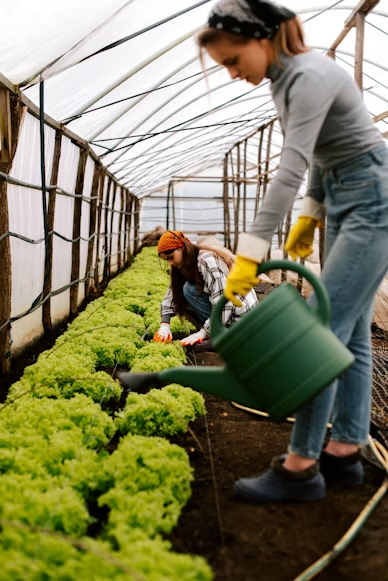
Good opportunities might include helping on an organic farm, supporting an eco-project, maintaining a community garden, assisting at a small guesthouse, helping with conservation work, or sharing a specific skill with a local organization.
Be cautious of projects that are vague about what volunteers will actually do or that seem designed primarily to provide an experience for tourists rather than solve a genuine need.
Use Your Existing Skills
You don't need to be an expert to make a contribution. However, the skills you already have can often be more valuable than simply providing extra hands.
Photography, cooking, gardening, carpentry, construction, website development, social media, languages, teaching, and animal care are just a few examples. Ask your host what they need and explain what you can realistically offer.
Stay Long Enough to Be Useful
Very short placements can make it difficult to learn the work and become genuinely useful. If possible, staying for several weeks gives you time to understand the project, take responsibility for tasks, and leave something useful behind.
Longer stays can also reduce the amount of time and resources a host needs to spend repeatedly training new volunteers.
Respect the Local Community
Sustainable volunteering starts with understanding that you're a guest. The local community knows its own needs better than a short-term traveler does.
Listen to your host, follow local customs, and avoid assuming that your way of doing something is automatically better. Your role is to support the project rather than take control of it.
Think About the Environmental Impact
Travel itself has an environmental cost, so consider how you can reduce your impact while volunteering abroad. Staying longer rather than constantly moving between destinations is one simple way to make your trip more efficient.
You can also choose projects focused on sustainability, organic farming, conservation, renewable energy, recycling, or responsible tourism. Using public transport, reducing waste, and supporting local businesses can further reduce the impact of your stay.
Be Careful With Short-Term Charity Projects
Not every project described as volunteering creates a positive impact. Some activities can unintentionally create dependency or take opportunities away from local workers.
Be particularly careful with projects involving vulnerable children or communities. Good intentions are not always enough, and some types of work require professional qualifications, background checks, or long-term involvement.
For most travelers, practical projects such as farming, gardening, hospitality, maintenance, conservation, and helping small businesses are a straightforward way to contribute useful work without requiring specialist qualifications.
Support Local Businesses
Your contribution doesn't have to stop when your workday ends. Where possible, spend your money with locally owned businesses, eat at local restaurants, shop at local markets, and use local guides and services.
This helps ensure that more of the money generated by tourism stays within the community you're visiting.
Ask Questions Before You Arrive
A little research before accepting a placement can tell you a lot about whether an opportunity is genuinely sustainable. Ask your host what the project does, why volunteers are needed, what your responsibilities will be, and what happens when volunteers leave.
You should also understand the accommodation, meals, working hours, and expectations. A clear agreement makes the experience better for both you and your host.
Leave Something Behind
The best volunteer experiences don't simply provide help for a few weeks. They leave the project in a slightly better position than when you arrived.
That could mean improving a garden, completing a renovation, creating useful photos for a small business, teaching someone a skill, helping establish a better system, or simply taking care of important everyday tasks that the host doesn't have time to do.
Make Your Travel More Meaningful
Sustainable volunteering isn't about trying to save the world during a two-week trip. It's about making a useful contribution, however small, while respecting the people and places you're visiting.
Choose your host carefully, use the skills you have, stay long enough to be useful, and approach the experience with an open mind. Done well, a work exchange can benefit both the traveler and the host.
Find a Meaningful Work Exchange
Ready to travel while contributing your time and skills? Browse StayWay hosts and discover work exchange opportunities where you can make a real contribution while experiencing life in a new place.
Ready to start your adventure?
Join the StayWay community and discover volunteer opportunities around the world.